Introduction — The Question Every Buyer Asks After Receiving a Quote of color glaze bone china vs porcelain
It happens all the time.
A designer develops a clean, modern collection: smooth shapes, solid color glaze finish, no complicated artwork. The concept looks minimal, elegant, and easy to manufacture. They send the request to suppliers and ask for two versions—one in porcelain, one in bone china.
Then the quotation arrives.
The porcelain quote feels normal. The bone china quote looks dramatically higher.
And the buyer’s first reaction is almost always disbelief:
“It’s the same color glaze mug. Why is bone china so much more expensive?”
From the outside, both products look similar. Both are glossy, smooth, and refined. In photos, they may even look identical. But inside the factory, these two products are not produced through the same route.
The price gap is not simply because bone china is a luxury material. The real reason is much more practical: bone china color glaze requires a different process path, more firing cycles, more manual control, a lower yield rate, and significantly higher manufacturing risk.
In most cases, porcelain color glaze is completed as a standard glazing step, while bone china color glaze is applied after the white ware is finished and then fired again.
That one difference is enough to create a “huge” price gap.
This article explains the true cost structure behind color glaze bone china vs color glaze porcelain, from a factory perspective, so buyers can understand what they are paying for and how to avoid costly surprises during sampling and mass production.
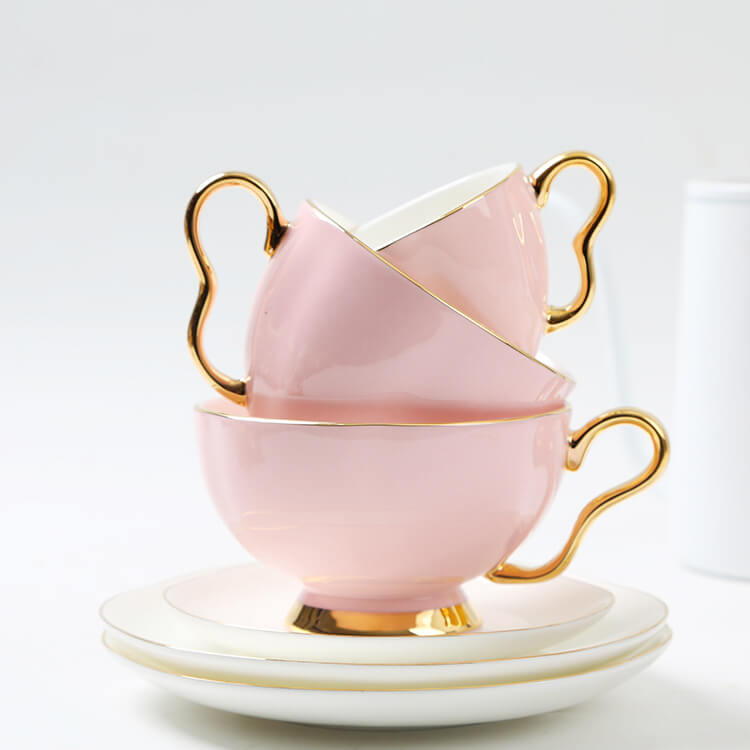
What Is Color Glaze? (And Why It Looks Simple but Isn’t)
Color glaze is often mistaken for “colored coating,” but it is not paint.
A true color glaze finish means the glaze layer itself contains pigment. The color becomes part of the ceramic surface after firing. That is why color glaze has a deeper and cleaner look compared with decals or surface printing. It feels more like the product is naturally made from a colored material.
This is exactly why luxury and contemporary brands love color glaze collections. They look modern, minimal, and premium without relying on complex patterns.
But the same feature that makes color glaze look expensive also makes it difficult to manufacture.
Because the entire surface is one uniform tone, the glaze itself becomes the design. There is nowhere to hide. A small pinhole, a dust spot, an uneven thickness area, or a slight gloss difference becomes immediately visible.
That is why color glaze is not a “simple finish.” It is a high-control production technique.
The #1 Cost Difference: Porcelain Can Dip Color Glaze, Bone China Usually Cannot
If buyers want the shortest explanation for the cost gap, it is this:
Porcelain can often apply color glaze by dipping and complete the job with one glaze firing. Bone china usually requires finished white ware first, then spraying, then a second glaze firing.
Bone china color glaze is typically not just “one more step.” It is a different production route.
Typical Porcelain Color Glaze Process (Dipping Method)
In porcelain manufacturing, color glaze is often part of the normal glazing stage.
After bisque firing, the porcelain body can be dipped directly into the colored glaze. Dipping is efficient because it naturally produces uniform thickness across the surface. This helps stabilize the final color result, improves consistency, and supports mass production.
After dipping, the pieces go into the kiln, and the glaze is matured in one glaze firing.
This workflow is industrial, scalable, and relatively predictable. It is also one of the reasons why porcelain color glaze pricing is often stable and easier to quote.
Typical Bone China Color Glaze Process (Spraying on Finished White Ware)
Bone china is different.
High-quality bone china is valued for whiteness, translucency, refined touch, and lightweight feel. To preserve these qualities, bone china typically uses transparent glaze, not thick white glaze.
Because of the body characteristics and firing sensitivity, bone china often cannot simply follow porcelain’s dipping logic for heavy color glaze at the raw stage.
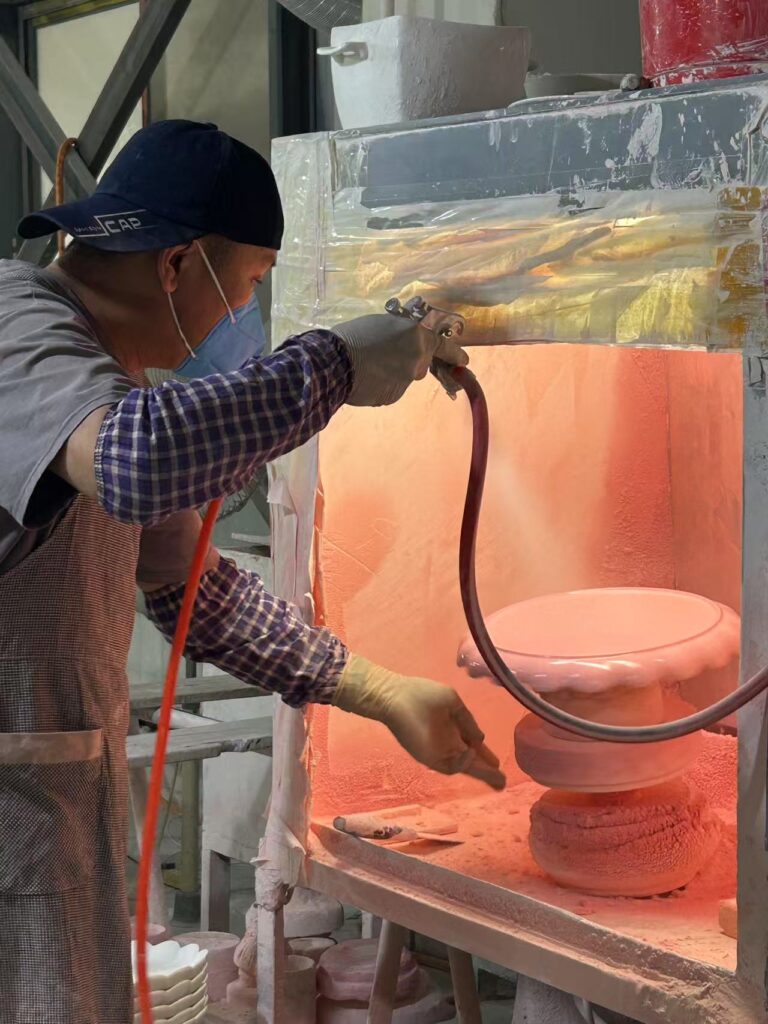
Instead, the standard route in many factories is to produce white bone china first, then the factory sprays the color glaze onto the finished surface, and then the product must be fired again.
This means bone china color glaze often involves two glaze firings.
The first glaze firing produces the refined white bone china surface. The second firing is required to mature the sprayed color glaze layer. This second firing is when costs and risks increase sharply.
How One Extra Glaze Firing Creates a Huge Price Gap
Many buyers underestimate how expensive “one more firing” really is.
A second firing is not only about energy consumption. It creates cost pressure in multiple areas at the same time.
First, it increases kiln cost. Large kilns require huge gas or electricity input, and firing schedules must be stable. But beyond energy, kiln capacity itself is valuable. If the kiln is occupied by second firing orders, the factory loses production space for other projects. That lost capacity becomes a real cost factor.
Second, it increases labor. Spraying color glaze requires skilled workers. Unlike dipping, spraying introduces more variation. Thickness control becomes critical, and additional work is needed to keep rims clean, correct uneven coverage, and avoid contamination.
Third, it increases handling. Bone china pieces must be loaded and unloaded again, moved again, sorted again, and re-packed for kiln loading. Each additional transfer increases breakage risk, especially for thin cups, saucers, and plates.
Finally, it increases risk. If porcelain fails after one glaze firing, the loss is limited. But if bone china fails during the second firing, the factory loses not only the body, but also everything already invested in the finished white ware stage.
That is why bone china color glaze quotations often feel “unreasonably high.” The factory is not charging for color. The factory is charging for risk and yield loss.
Why Bone China Cannot Easily Dip Color Glaze on the Raw Body
A common buyer question is: “If porcelain can dip color glaze easily, why can’t bone china do the same?”
The answer comes from two aspects: the feature of bone china biscuitware and the firing temperature differences.
Bone china is thinner, finer, and more delicate with a high shrink rate during firing. Dipping directly in the glaze would has a high risk of breaking. and during high-temperature firing, the body softens more easily than porcelain. This is especially risky for plates, bowls, and wide-rim shapes where flatness matters.
Bone china behaves differently during firing, and the firing temperature requirements for white bone china glaze and color glaze are often not identical. Color glaze is also typically thicker and more “active” during firing. It can flow, accumulate at edges, and create uneven distribution. If this thicker glaze layer is applied too early or too heavily, it increases stress on the bone china body. That makes deformation and warping more likely.
But the most critical issue is temperature.
Bone china requires a specific firing curve to achieve its clean surface and translucent luxury feel. Color glaze, depending on the pigment system and glaze formula, may mature best at a different firing temperature. If the kiln curve is optimized for the white bone china glaze, the color glaze may appear dull, uneven, or underdeveloped. If the curve is adjusted for the color glaze, the bone china body may deform or the glaze may overfire.
This mismatch makes dipping color glaze on raw bone china body difficult to control at scale.
That is why many manufacturers choose the safer route: finish the white bone china first, then spray the color glaze, then fire again.
Raw Material and Body Composition: Bone China Starts at a Higher Cost Level
Even without the color glaze, bone china has a higher base cost than porcelain.
True bone china(in comparison to new bone china) uses bone ash and is formulated to achieve translucency and refined whiteness. The raw materials themselves are more expensive, but the larger cost difference comes from process control. Bone china production requires stricter consistency in body density, shrinkage behavior, and firing stability.
When color glaze is added, body composition becomes even more important.
The same glaze formula does not always look the same on different bodies. Bone china’s whiteness and translucency influence the final appearance of glaze color, often making the shade appear cleaner, lighter, or slightly different from porcelain.
That means factories cannot simply reuse porcelain glaze recipes. They must adjust pigment ratios, glaze chemistry, and firing curves specifically for bone china projects. This development stage adds time and cost long before mass production begins.
Labor and Handling: Bone China Color Glaze Requires More Manual Control
Bone china color glaze is expensive partly because it is labor-intensive.
Unlike porcelain dipping, bone china color glaze is usually applied by spraying after the product becomes finished white ware. Spraying is not just “adding color.” It requires real skill. The operator must control glaze thickness carefully, because thickness directly affects the final shade.
A slight difference in spraying can change the product’s appearance. If the glaze is heavier, the color becomes deeper. If it is thinner, the color looks lighter and less premium. On glossy surfaces, uneven thickness also changes light reflection, making the set look inconsistent even when the color formula is technically the same.
This is why bone china color glaze often requires experienced technicians rather than basic production workers.
Handling cost is another major factor. Bone china pieces are usually thinner and more fragile than porcelain. Once the process includes a second spraying stage, the product must be moved again, loaded again, and fired again. Every additional transfer increases the chance of chipping, cracking, or micro damage.
For high-end customers, even small flaws are unacceptable. That means more inspection, more sorting, and more rejected pieces.
And in many cases, the labor cost is not only higher—it is also more specialized. This leads to another hidden reality in the bone china industry.
A Hidden Industry Reality: Bone China Color Glaze May Require Specialized Workshops
Here is something buyers rarely hear directly.
In porcelain factories, color glaze is often just a normal final step. Many production lines can handle it efficiently as part of standard manufacturing.
Bone china color glaze is different. It demands stricter control over glaze chemistry, pigment stability, spraying skill, and kiln temperature curves. Not every bone china factory has the full capability to produce consistent color glaze in-house, especially when the project involves darker tones, matte surfaces, or high-end quality requirements.
This is why some bone china factories choose a safer route: they produce the product as finished white bone china first, then send it to a specialized workshop for color glaze spraying and second firing.
This is not simply outsourcing for cost reasons. It is often a technical decision.
A specialized workshop may have dedicated spraying teams, more stable glaze formulas, stricter firing control, and kiln systems optimized specifically for color glaze development. The goal is not cheaper production—the goal is stable quality.
However, this reality creates additional costs that buyers do not immediately see. Transportation, handling, re-checking, and coordination increase both labor cost and breakage risk. Lead time may also increase because production must be scheduled across multiple facilities.
This is another reason why bone china color glaze quotations can be significantly higher than porcelain. The project becomes a multi-stage route rather than a single streamlined factory workflow.
Yield Rate (Scrap Rate) — The True Cost Driver Behind Bone China Color Glaze
If you ask experienced manufacturers why bone china color glaze is expensive, they may not start by talking about raw materials.
They will talk about the yield rate.
Bone china color glaze has more possible failure points. The second firing stage increases risk. Spraying introduces human variation. Bone china itself has a narrower firing window than porcelain. Dark colors amplify imperfections. Matte surfaces highlight texture issues.
That combination naturally creates a higher defect rate.
Even when the factory uses the same glaze formula, the final appearance can shift due to small changes in glaze thickness or kiln temperature distribution. Minor imperfections that would be barely noticeable on white ware become obvious on a solid color glaze surface.
This is why bone china color glaze often produces more rejected pieces than porcelain.
The real cost issue is that defective color glaze items cannot easily be downgraded. With white ware, factories sometimes sell imperfect pieces into lower markets. With color glaze, inconsistency is immediately visible. A slightly uneven shade, a tiny dust spot, or a small glaze defect can ruin the entire luxury impression.
That means scrap is real scrap. And scrap cost must be absorbed into the final unit price.
This is the reason why the price difference between color glaze bone china and color glaze porcelain can become huge.

Color Matching and Batch Consistency: Why Bone China Is Harder to Repeat
Many buyers provide Pantone codes, but ceramic glaze is not printing ink.
In color glaze production, the final shade depends heavily on glaze thickness and firing curve. A small temperature variation can shift the hue. A small gloss variation can change how the eye perceives the color.
Bone china is more sensitive to these variables. Because the body is whiter and more translucent, the final appearance of the color glaze can shift more easily. This is why buyers sometimes feel that the sample looks perfect, but bulk production looks slightly different.
Factories with strong technical ability can control this, but it requires additional testing, stricter discipline, and more trial firing. That is part of the cost structure behind premium bone china color glaze projects.
Performance Expectations: Why Premium Buyers Demand More from Bone China
Bone china buyers usually want more than color.
They want the luxury feel. They want lightweight touch, refined edges, smooth surface, and a clean, premium glaze reflection. If the color glaze looks heavy or industrial, the product loses the refined bone china identity.
Many buyers also require durability. They ask whether the product is dishwasher safe, whether matte surfaces scratch easily, and whether dark colors fade or lose gloss after repeated use.
To meet these expectations, manufacturers must use high-quality glaze systems and stable firing control. Buyers should also request lead-free glaze for food-contact safety, especially for EU and US markets.
For premium hotel and retail projects, performance is part of the product’s value. That is why the manufacturing standard for bone china color glaze is higher.
When Porcelain Color Glaze Is the Smarter Choice
Porcelain is often the smarter choice when the project needs predictable mass production at a controlled cost.
It works well for promotional gifting, restaurant channels, large retail programs, and projects with tight delivery schedules. Porcelain color glaze is easier to scale because dipping production is efficient and stable.
For buyers who prioritize cost-efficiency and fast turnaround, porcelain color glaze is often the safer route.
When Bone China Color Glaze Is Worth the Higher Price
Bone china color glaze is worth the premium when the product must deliver a luxury experience in hand, not just look good in photos.
It is ideal for museum gift shops, designer collaborations, premium homeware brands, boutique hotels, and high-end corporate gifting programs. In these markets, customers pay for refinement and emotional value.
Bone china also performs beautifully with quiet luxury tones. Colors such as ivory, warm beige, misty grey, muted blue, and soft sage often look exceptionally elegant on bone china, especially when paired with clean shapes and minimal decoration.
In those cases, bone china is not competing with porcelain on cost. It is competing on perceived value.
Practical Buying Tips: How to Avoid Cost Surprises
If you want to avoid expensive surprises, the best time to control costs is before sampling.
First, confirm the process route. Ask whether the factory applies the color glaze by dipping or spraying. If the supplier confirms that bone china color glaze is applied after finishing white ware, you should expect two glaze firings, longer lead time, and higher cost.
Second, confirm the surface standard. Gloss, satin, and matte finishes behave differently. Matte surfaces often have a higher scratch risk and may require more careful glaze development. Many projects fail not because the color is wrong, but because the gloss level is inconsistent.
Third, approve samples under real lighting. A glaze color can look perfect under showroom LEDs and different under daylight. Professional buyers should always check both.
Fourth, plan a realistic lead time. Bone china color glaze requires trial firing to stabilize shade and surface quality. If the timeline is too tight, the risk of batch variation increases.
Finally, insist on lead-free glaze systems for food safety. This should be treated as a basic requirement, not an optional upgrade.
One more detail is often overlooked: bone china is typically based on transparent glaze, not white glaze. This influences how color develops and is one reason why bone china color glaze is harder to control than porcelain.
Cost Optimization Ideas for Designers (How to Keep the Luxury Look Without Breaking the Budget)
Color glaze does not have to mean full-body dark coverage.
Deep colors across the entire surface increase defect visibility, raise yield loss, and demand stricter spraying control. If cost matters, designers should consider using partial color glaze instead of full coverage.
A colored exterior with a white interior is a common premium solution. It maintains the clean luxury feel while reducing production risk. Rim accents, foot ring colors, and subtle tone variations can also create a strong brand identity without forcing the factory into the highest-risk process.
Another strategy is to replace full color glaze with decals or minimal line artwork. A white bone china base with refined decoration often looks more luxurious than a heavy saturated glaze.
Designers can also reduce cost by developing a series based on one stable color family. When multiple items share the same glaze formula, the factory can maintain consistency more easily, reduce development time, and improve yield rate.
The best luxury design is not always the most complex one. It is the one that balances aesthetics with manufacturability.
Conclusion — The Price Gap Is About Process, Risk, and Yield
Color glaze porcelain and color glaze bone china may look similar in product photos, but their manufacturing routes are fundamentally different.
Porcelain color glaze is often applied by dipping and completed in one glaze firing. The process is efficient, stable, and scalable.
Bone china color glaze is usually applied after the product has finished as white bone china. The factory completes the white ware first, then sprays the color glaze, then fires again. That means two glaze firings, more labor handling, higher defect risk, and lower yield rate.
That is why the price difference is so huge.
Bone china is not expensive because it is “luxury branding.” It is expensive because it requires a more complex and risk-sensitive production process to achieve luxury-level results.
If your market demands a refined touch, a lightweight feel, and a premium appearance, bone china color glaze is worth it. If your project needs cost control and fast mass production, porcelain color glaze may be the smarter route.
The right decision is not about choosing the cheaper material. It is about choosing the right manufacturing logic for your product positioning.
FAQ (Featured Snippet Section)
Why is color glaze bone china more expensive than porcelain?
Because bone china color glaze is usually sprayed on finished white bone china and requires a second glaze firing, which increases labor, kiln cost, handling, and scrap risk.
Can bone china be dipped in colored glaze?
In most cases, it is difficult. Bone china has a narrower firing window and higher deformation risk, while color glaze is thicker and more active during firing.
Does color-glazed tableware have color variation?
Yes. Color glaze is affected by glaze thickness, kiln temperature, and firing atmosphere. Bone china is more sensitive, so batch consistency is harder.
Is the color-glazed bone china dishwasher safe?
It depends on the glaze formula and firing quality.
What is the MOQ for color glaze bone china?
Check with the manufacturer to find the exact quantity that’s workable. It’s not the more, the better.
How can I reduce the cost of a color glaze dinnerware project?
Avoid full-body dark glaze, consider partial color glaze, combine with white bone china, and design around stable color families to reduce yield loss.